
ADRC Winter information
Closing due to inclimate weather will be announced on:
- ADRC Facebook Page
- ADRC Website Nutrition Program Page
- TV Stations
- WBAY
- WLUK
- WTMJ-TV (TMJ4)
- FOX 6 STORM CENTER
- WISN
- Radio stations
- KFIZ 100.7FM/1450 AM
- The Source Radio—Waupun 95.3
- FM/1430AM.
Be Sure to fill your cupboard and freezer with your favorite “emergency” foods. Include foods that don’t require cooking if power were to go out.
Keep on hand:
- MANUAL can opener
- Extra batteries
If there is no heat:
- Close off unneeded rooms
- Stuff towels, rags or extra clothes in cracks under doors
- Cover windows at night to reduce heat loss
- Eat and drink to stay warm. Food provides the body with energy for producing its own heat.
- Wear layers of loose-fitting, lightweight, warm clothing.
- Exercise to stay warm. Exercising from time to time by vigorously moving arms, legs, fingers and toes will keep the blood circulating and help keep you warm.
As temperatures begin to drop, older adults run a higher risk of health problems and injuries related to the weather, including hypothermia, frostbite and more. It’s better to be prepared and take precautions especially during winter months.
Hypothermia occurs when your body temperature drops to a dangerous level. Your body temperature can drop when you’re out in the cold for an extended time because it begins to lose heat quickly.
Warning Signs:
- Cold skin that is pale or ashy
- Feeling very tired, confused and sleepy
- Feeling weak
- Problems walking
- Slowed breathing or heart rate
Precautions:
- Stay indoors
- Keep indoor temperature at 65 degrees or warmer
- Stay dry
- Dress smart- layer up!
- Call 911 if you think you or someone else is experiencing hypothermia.
Frostbite occurs when your body experiences damage to the skin that can go all the way down to the bone. It’s most likely to occur on body parts furthest away from your heart. Common places include your nose, ears, cheeks, chin, fingers and toes.
Severe frostbite can result in loss of limbs. People with heart disease and other circulation problems are at a higher risk. If you get frostbite run the affected area under warm (not hot) water.
Falls Prevention: Winter Safety
Icy conditions make it harder to stay on your feet, and the cold may cause us to limit our activity, which can lead to loss of strength and balance.
Outdoor Safety
- Keep sidewalks and stairs outside your home clean of ice and snow. Make sure steps leading into your home have sturdy, handrails that can support you if you slip.
- Carry a small bag or shaker of rock salt, sand, or kitty litter in your pocket or purse to sprinkle in front of you for traction on icy paths while you’re out and about.
- When walking on surfaces that may be icy, shorten your stride and walk with feet pointed out slightly and knees gently bent (think like a penguin) to improve traction and balance.
- Avoid walking in more than an inch of snow. Snow can hide curbs, uneven surfaces and other tripping hazards.
Dress for the Weather
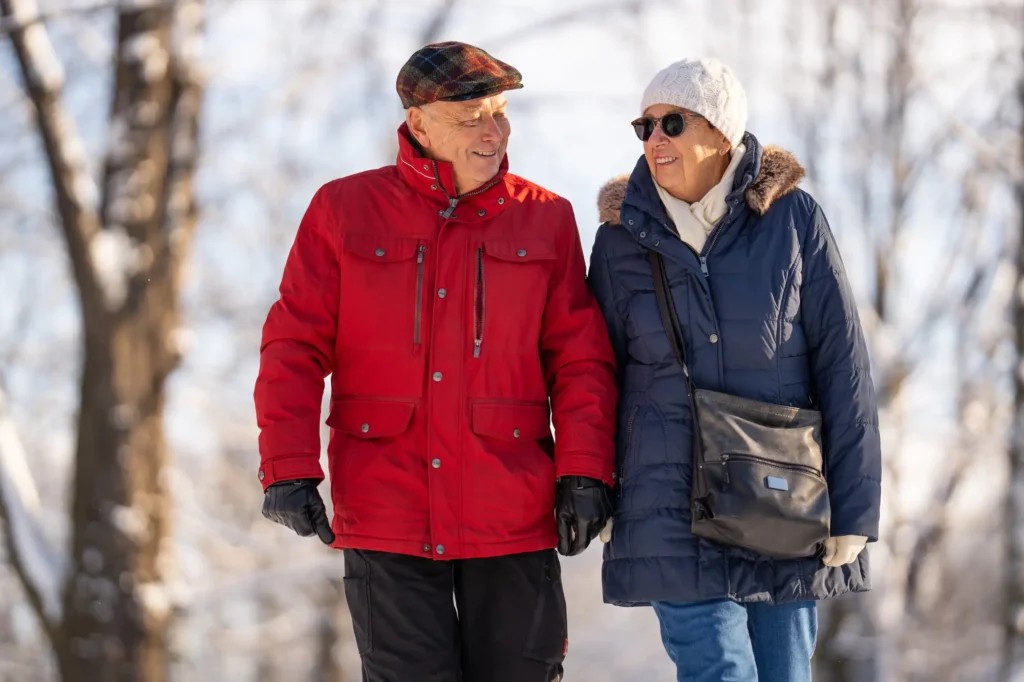
- Choose coats, gloves, hats, and other winter attire that are designed to keep you warm but that also fit well and are not so bulky that they can restrict your movement or catch on nearby objects.
- Wear boots and shoes that fit properly and have soles with good traction. Keep shoes and walking aids (canes, walkers) dry and free of snow, ice, dirt, and mud.
- Carry a cell phone and designate someone to call for help if you need it.
- Let loved ones know when you are leaving the house and when you expect to be back; call them after you return home.
Stay Healthy
- Maintain regular physical activity during winter months to ensure you have the strength and balance you need to prevent falls. Ask your doctor or physical therapist about easy indoor exercises and seek opportunities to be active.
- Eat well and drink plenty of water to make sure you have the strength and focus to stay on your feet.
Safe at Home
- Clean up ice and snow tracked indoors and immediately remove wet footwear upon entering your home. Keep a chair and clean shoes or slippers by the door.
- Ask your post office, newspaper, and garbage collector about service options that might make it safer for you when conditions are bad.
- Invest in extra lamps, nightlights and exterior lights so that you can always see where you are walking, especially around doorways and stairs. Use the highest-wattage bulbs recommended for your fixtures.
- Keep space heaters, cords, and blankets out of walkways. If you must use throw rugs on cold floors, secure them to the floor with tape.
- Keep flashlights near doorways and staircases in case the power goes out and you are left without lights in your home
Articles originally posted in the newsletter from ADRC of Fond du Lac