It’s An Effort To Ensure Patients Have Continued Access To Quality Healthcare
The United States faces shortages across many healthcare professions, including physicians, specialty care clinicians, nurses and diagnostic and imaging technologists. ThedaCare is responding by investing in programs designed to help strengthen the pipeline of future radiologic technologists and other physician specialties.
It’s part of the health organization’s proactive efforts to ensure patients in and around northeast and central Wisconsin continue to have access to high-quality healthcare services.
One such effort is the ThedaCare School of Radiologic Technology. The accredited, 21-month, hospital-based certificate program prepares students to become certified registered radiologic technologists. Aspiring technologists complete rotations in radiology, interventional radiology, MRI, CT, mammography and surgery, said Troy Albrecht, program director of the ThedaCare School of Radiologic Technology.
“We know the need for highly skilled imaging professionals is only going to continue to grow,” Albrecht explained. “Programs like ours are critical because we’re not simply filling positions, we’re developing the next generation of radiologic technologists who will care for patients throughout our communities for decades to come.”
The American Society of Radiologic Technologists said the United States faces a significant radiologic technologist workforce shortage. Vacancy rates across medical imaging specialties remain at or near historic highs, ranging from roughly 11% to 19% depending on the specialty.
Another effort is ThedaCare’s Graduate Medical Education (GME) program. It was developed to help address physician shortages, particularly in rural and underserved communities, while creating opportunities for physicians to train and build careers locally.
Froedtert ThedaCare is working in concert with the Medical College of Wisconsin Affiliated Hospitals for the GME program to advance knowledge and train future medical professionals. The effort strategically supports the health system’s mission of advancing the health of the communities through excellence and discovery.
The need for such programs is significant. Data from the Wisconsin Hospital Association shows Wisconsin needs between 2,000 and 4,000 additional physicians by 2035.
Studies show nearly 55% of individuals who complete residency training remain in the community in which they train to practice medicine. Further, 70% of physicians stay in the state when they complete both their GME and residency in the same state.
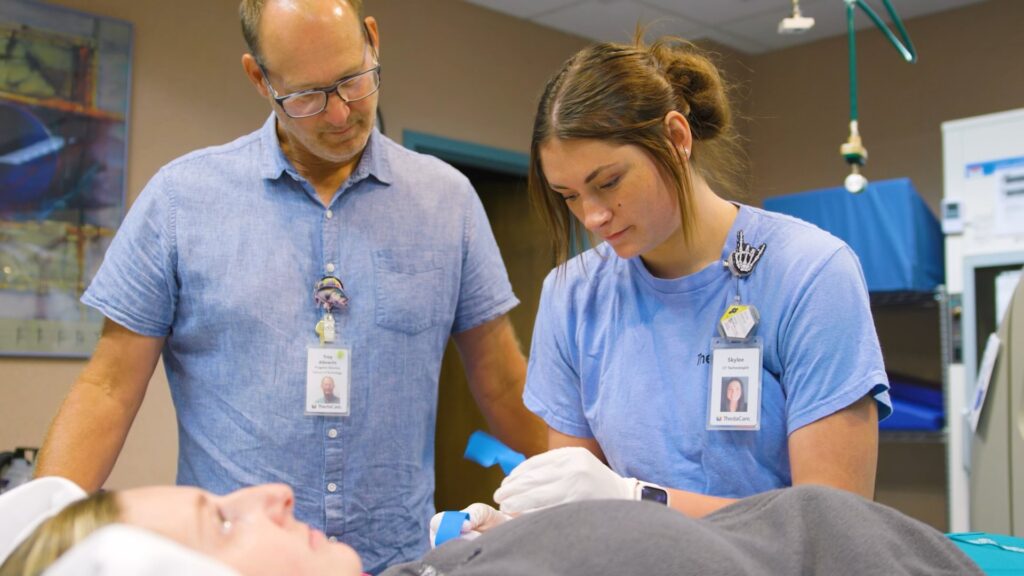
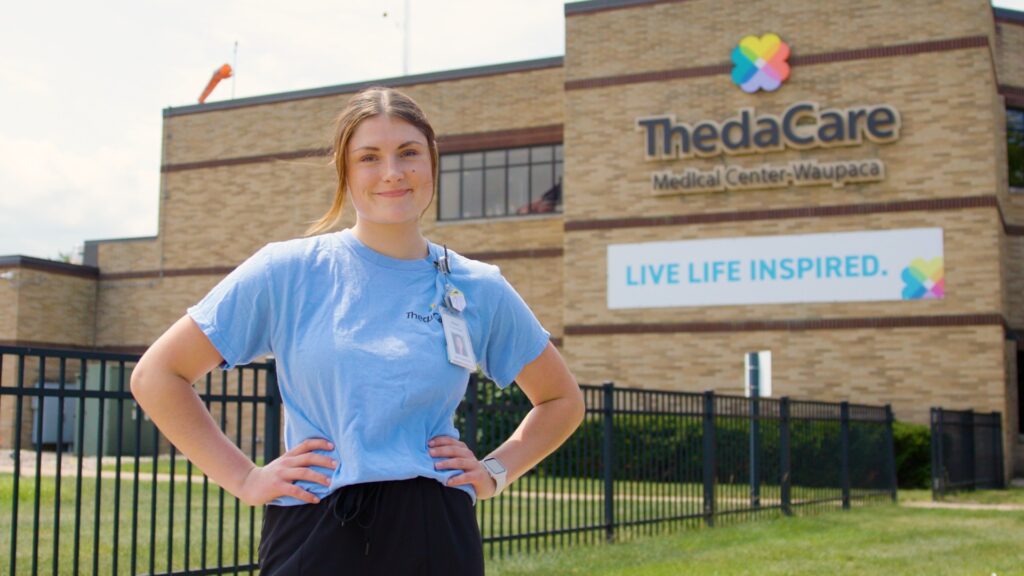
The United States faces a significant radiologic technologist workforce shortage. The ThedaCare School of Radiologic Technology is making an impact, as can be seen in the career paths of healthcare professionals like Skylee Manecke. She is a June 2026 graduate and an X-ray and CT technologist at ThedaCare Medical Center-Waupaca.
An Investment in the Future
The ThedaCare School of Radiologic Technology is making an impact, as can be seen in the career paths of healthcare professionals like Skylee Manecke. She is a June 2026 graduate and a X-ray and CT technologist at ThedaCare Medical Center-Waupaca.
Her journey toward a career in healthcare began long before setting foot in the classroom.
She survived a stroke at just 13 years of age and grew up determined to care for others just as she was cared for by her nurses, CT and MRI techs, doctors and neurologists.
“They changed my life for the better,” she said. “It made me want to do nothing more than the same for someone else.”
The ThedaCare School of Radiologic Technology program helped turn that goal into reality.
During the program, Manecke completed clinical rotations in X-ray, fluoroscopy, surgery and CT, gaining the skills and confidence needed to begin her career.
“It’s just hands on, all day long and staying confident while learning,” she said. “In the end, the confidence it gives you after graduation is unbelievable.”
“I’m especially proud that so many of our graduates, like Skylee, remain in Wisconsin and become part of the workforce caring for our own communities,” said Troy Albrecht, program director of the ThedaCare School of Radiologic Technology.
Intentional Connection
The Edgar, Wisconsin, native said the support she received from instructors and classmates was as valuable as the technical training. “Truly, they’re people who understand what you’re going through and that’s what gets you through it.”
Creating that sense of connection is intentional, Albrecht said.
“We tell the students that this isn’t just a program. It’s about family,” he said. “We want you to work within ThedaCare. We build that relationship with students where they have the trust that we’re going to be there for them.”
“I’m especially proud that so many of our graduates, like Skylee, remain in Wisconsin and become part of the workforce caring for our own communities,” Albrecht added. “Over the years, we’ve built what I like to call our ‘radiology family,’ with graduates working throughout the region and continuing to support our students and one another.”
Today, Manecke, as part of that radiology family, is already making a difference for patients throughout the region.
“If they’re feeling sad, I’m going to be that supportive person,” she said of her patients. “If they’re in a joking mood, I go with that. It’s very much being able to read a person and giving them the best experience.”
Albrecht said radiologic technologists remain essential to patient care, providing the diagnostic information that helps patients receive timely answers and effective treatment.
“We have to know how to position the bone, how to image the heart appropriately to see if it’s blocked. The patients don’t realize that we’re kind of the hidden heroes behind the scenes, that we create the picture to figure out what’s wrong with them,” he said. “From there, we work as a team with doctors and nurses and surgeons to help get that patient back together.”
The ThedaCare School of Radiologic Technology and the Graduate Medical Education program are concerted efforts to address current and projected shortages of medical professionals. They also help prepare new caregivers to serve communities across northeast and central Wisconsin.
For Manecke, those efforts are resonating, especially given her own medical history and strong desire to help others.
“I live every single day like it’s my last,” she said. “I actually have a tattoo. It says, ‘You could be gone tomorrow. Love today.’ And I think that’s very telling of how I live my life every single day and how much thankfulness I have in everything.”
About ThedaCare
For more than 115 years, ThedaCare® has been improving the health and well-being of the communities it serves in northeast and central Wisconsin. The organization delivers care to more than 650,000 residents in 17 counties, and employs approximately 7,000 providers and team members at 180 points of care, including 10 hospitals. As an organization committed to being a leader in Population Health, team members are dedicated to empowering people to live their unique, best lives. ThedaCare is a not-for-profit health system with a level II trauma center, comprehensive cancer treatment, stroke and cardiac programs, as well as primary care. ThedaCare also partners with communities to understand needs, find solutions together, and encourage health awareness and action. ThedaCare is part of Froedtert ThedaCare, Wisconsin’s most comprehensive healthcare system.
Date posted: August 27, 2026