ThedaCare Cardiologist Urges Quick Action When Heart Attack is Suspected
Scott Siolka takes nothing for granted when it comes to his health. Surviving a major heart attack last year reinforced the importance of paying attention to his body’s cues.
In February of 2025, Siolka suffered a widow-maker heart attack. It’s an informal name for a severe form of heart attack resulting from complete blockage in the left anterior descending artery. The artery is a major vessel carrying blood to the heart. Complete blockage in the artery may lead to extensive damage and death.
Siolka is encouraging others to heed their body’s cues. He’s been sharing that message as loudly as he can. That’s why he threw out the first pitch as an honorary survivor for CPR Night at Neuroscience Group Field last August. The annual event – presented by ThedaCare, Gold Cross Ambulance, Ascension and the American Heart Association – helps raise awareness about cardiopulmonary resuscitation (CPR), a lifesaving skill that anyone can learn.
“I’m incredibly thankful,” said Siolka, who lives between Cecil and Shawano. “It was a real honor.”
Recalling his experience with a heart attack, Siolka, 49 years old at the time, said the health ordeal started at work.
No Ordinary Day
A shop floor designer with Pierce Manufacturing, Siolka said the start of his day was fairly routine but quickly turned sideways. That morning, as he was preparing to leave, he felt a little lightheaded, nauseous and weak in his legs.
“I didn’t think anything of it because it went away right away,” Siolka said. “So, I just went on with my day.”
As he settled into his routine, the symptoms returned, only a little stronger. Sitting at his desk, Siolka began to sweat profusely while simultaneously feeling ice-cold. Chest pain soon followed.
Growing concerned, Siolka conferred with a colleague, who’s also a firefighter. As Siolka described his symptoms, his coworker recognized the gravity of the situation. Siolka likely was having a heart attack.
“He turned around and looked at me and said, ‘Don’t move,’” Siolka said. “I wasn’t sure what was going on.”
His colleague paged Pierce’s emergency team and called 911. Grand Chute paramedics arrived in less than five minutes.
Lifesaving Intervention
En route to ThedaCare Regional Medical Center-Appleton, Siolka’s situation took a turn for the worse. The team administered a clot-busting drug that likely saved his life. Such medications help dissolve blood clots and restore normal blood flow.
Once at the hospital, Siolka’s memory ends with the team opening the doors of the ambulance. Shortly thereafter, he coded – meaning his heart and/or breathing stopped. It took teams 25 minutes to revive him. He coded two more times.
Doctors discovered a 95% blockage of Siolka’s left anterior descending artery, the widow-maker heart attack. The artery might have been 100% blocked had the EMS team not administered the clot buster, Siolka said.
“They said I was literally within five minutes of not making it,” he said. “The clot buster broke up 5% of my blockage and that was enough to keep me alive.”
Siolka underwent emergency surgery to clear the clot. He then had a stent placed to keep the artery open. Following his procedures, Siolka spent time on life support in the intensive care unit to allow his heart and other organs to heal.
The severity of the situation set in first with Siolka’s loved ones and then with him as he came to following his trauma.
“When I arrived at the hospital, I was met by a chaplain,” his then-fiancé, Justine, said. “That’s when I knew this was serious. I stayed by his side day and night, sleeping in chairs, just hoping he’d pull through.”
Other family members held vigil for Siolka at the hospital, too.
“Amazingly, just two and a half days later, Scott was breathing on his own,” Justine said. “Nurses and doctors – even some from the Emergency Department – came to visit him because they were thrilled at the progress he was making.”
Rapid Recovery
Siolka was released after about two and a half weeks in the hospital.
“Scott’s positive outcome underscores the importance of taking decisive action if you suspect something is off with your heart, even if the symptoms are subtle,” said Dr. Richard Santa Cruz, an Interventional Cardiologist with ThedaCare Cardiovascular Care. He placed Siolka’s stent. “Acting quickly may save lives.”
Siolka faced some challenges after his hospital stay. He needed dialysis due to damage his kidneys suffered when his blood supply was interrupted each time he coded. Then, fluid buildup led to a short hospital readmission.
Siolka would eventually improve, rapidly. He started with walking short stints outside. Not too far at first, but he continued to build each day.
“I just kept feeling better,” he said. “Other than having to go back to the hospital, I had no major setbacks.”
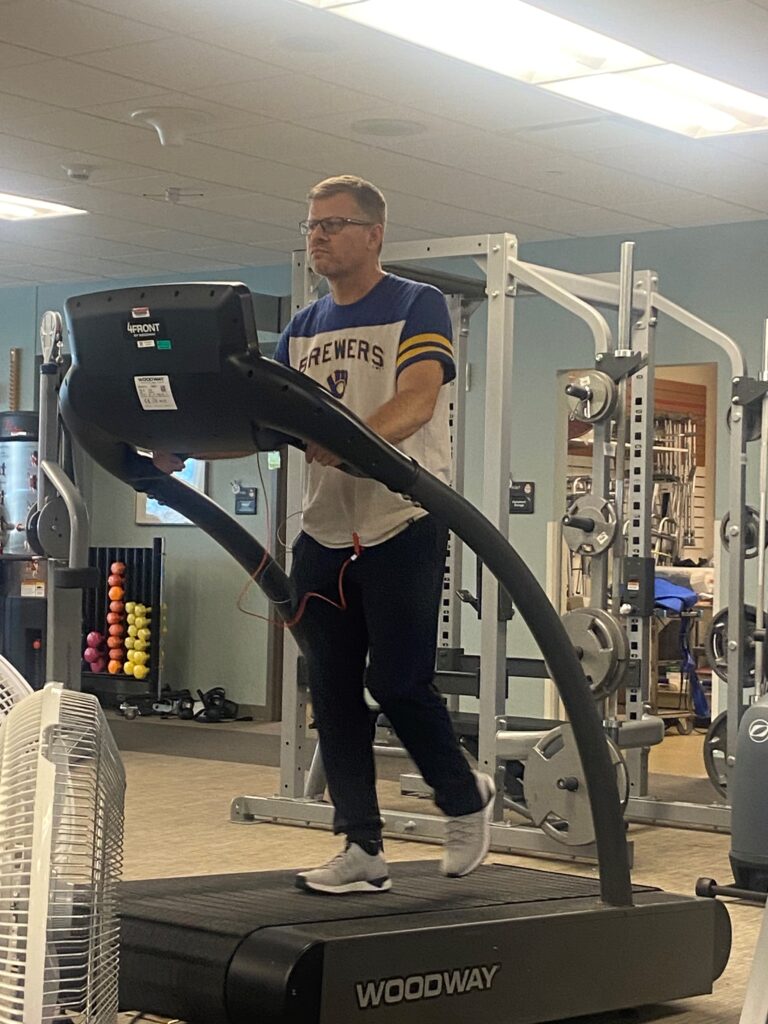
Scott Siolka listens to his body’s cues when it comes to his health. “Don’t take anything for granted,” he said. That mantra helped the ThedaCare patient survive a widow-maker heart attack in February 2025.
Dr. Santa Cruz celebrates positive stories like Siolka’s.
“It’s incredibly gratifying to work with patients like Scott and see them return to living a happy, healthier life,” he said. “Scott’s experience also highlights the importance of dialing 911 when a person appears to be experiencing a heart attack. Emergency steps are vital in these instances.”
Care and Support
As part of his continued recovery, Siolka participated in the ThedaCare Cardiovascular and Pulmonary Rehabilitation Program. He made quick progress and even “graduated” a few weeks early. He said the program offered reassurance as he began to resume a more active lifestyle.
“It helped to be on the EKG monitor,” he said. “When you’re pushing yourself, you know nothing is going to go wrong because they’re monitoring you the whole time.”
Justine reflected on Siolka’s recovery.
“By April, he graduated from dialysis,” she said. “In May, he swung a golf club again and we celebrated his 50th birthday with a trip to Myrtle Beach. He’s now back to work, stronger than ever.”
Siolka shared a message for others: Always pay attention to your body.
“Don’t take anything for granted,” he said. “If you don’t feel right, tell somebody.”
Justine echoes those sentiments. Thanks to Siolka “telling somebody,” the couple married in September 2025.
“To the EMTs, nurses, doctors and the entire ThedaCare team, thank you. You saved the love of my life,” she said. “Because of all of you – and a lot of faith – Scott is here today. And for that, I thank God every single day.”
About ThedaCare
For more than 115 years, ThedaCare® has been improving the health and well-being of the communities it serves in northeast and central Wisconsin. The organization delivers care to more than 650,000 residents in 17 counties, and employs approximately 7,000 providers and team members at 180 points of care, including 10 hospitals. As an organization committed to being a leader in Population Health, team members are dedicated to empowering people to live their unique, best lives. ThedaCare is a not-for-profit health system with a level II trauma center, comprehensive cancer treatment, stroke and cardiac programs, as well as primary care. ThedaCare also partners with communities to understand needs, find solutions together, and encourage health awareness and action. ThedaCare is part of Froedtert ThedaCare, Wisconsin’s most comprehensive health care system.